The Philosophy of Technology and the Nature of Technological Knowledge for Educators
Philosophy of Technology, Epistemology, Educators, Technological Knowledge
Sarah Pule
Abstract: This article explores the philosophy of technology and the nature of technological knowledge, emphasising its relevance for educators. It examines perspectives on knowledge and human nature, highlighting the epistemological underpinnings that shape our understanding of technology. The nature of technological knowledge is analysed in relation to its conceptual and procedural dimensions among others. Given its inherently multidisciplinary nature, technological knowledge draws from science, engineering, and social sciences, necessitating an integrative approach in educational contexts.
The discussion extends to epistemological frameworks for structuring technology programmes within education, addressing key theoretical considerations. Challenges associated with technological knowledge, such as its evolving nature and contextual dependency, are identified. This work suggests that defining a technological base structure and content to standardise curricular approaches is important for educators. The role of students and teachers in shaping technological understanding is acknowledged.
The article also explores how technological contexts, codification of knowledge and curriculum implementation can pose several challenges to educators. The science-technology debate continues to pose challenges when considering differences in scope, representation, and rank. This work advocates a pedagogy for technological knowledge that includes experiential learning, problem-solving approaches, and interdisciplinary integration to enhance technological literacy among students and educators.
The philosophy of technology has evolved into a distinct academic field and the nature of technological knowledge is currently enjoying epistemic emanicipation (Houkes, 2009), because it has diverged considerably from the notion that “technology is simply applied science” (Dakers, 2006b, 2018; de Vries, 2016a). Scholars like Dakers (2006a), Barlex & Steeg (2017b) and de Vries (2016b) highlight the interdisciplinary nature of technology, stressing its interconnections with social, political, economic, cultural, and philosophical discourses. They emphasise that technology education extends beyond vocational skills and includes broader societal impacts. de Vries (2016b) presents ways the philosophy of technology informs educators, policymakers, and technologists.
For educators, the philosophy of technology can be a source of inspiration for determining the content of a curriculum while offering insights into how to construct a personal pedagogy. It can provide a conceptual basis and better understanding of technological knowledge which can help technology educators respond to a diversity of situations while teaching about technology. The philosophy of technology can help to position the teaching of technology among other subjects, and also inform the research agenda for educational research in technology education.
This work is intended to inform educators, especially those who work in the STEM fields, about the main evolution of debates in the philosophy and epistemology of technological knowledge.
Perspectives of knowledge and human nature
Historically, societies like the Greeks, Romans, and Chinese disdained manual labour, associating it with slavery, while literate scholars focused on philosophy and science, leaving practical crafts to skilled but often illiterate artisans. By the 17th and 18th centuries, inventors typically lacked formal knowledge of contemporary scientific theories but still solved practical problems through tinkering (Dusek, 2006).
Distinct philosophers and scientists have debated the nature of knowledge throughout history. Plato argued that pure intellectual reasoning, rather than sense perception, was the path to truth, while Bacon emphasised that observation through the senses was essential for discovering truth and that theories based solely on reason were misguided (Dusek, 2006). For Comte, scientific knowledge was the highest and most valuable form of knowledge, surpassing that from the humanities. Historically, material culture was often disrespected and not considered academic (Norman, 1998). With the rise of economic and industrial influences, engineering was professionalised, and technology entered university curricula, yet abstract theory retained higher status, while practical work was still viewed as inferior (Layton, 1991).
The debate on technological tools versus language dates back to Greek philosophers who believed that manipulating surroundings with hands led to mind development. However, Plato, Aristotle, and others argued that the rational, contemplative mind, not tool use, defines human nature (Lewis, 1993). Benjamin Franklin, Marx, and Engels viewed humans as labouring animals and tool-makers. Twentieth-century philosophers shifted focus to language and symbolism for understanding rationality. Mumford, Heidegger, and Arendt emphasised language and symbol-making over the traditional spiritual mind. Arendt described differences between “homo faber,” “animal laborans,” and “animal rationale” in her lexicon (Staszowski & Tassinari, 2021). Technological optimists like Franklin and Engels saw tools as key to human qualities, while pessimists argued that language, not technology, defines humans and that technology degrades human communication and understanding. Marx and Habermas highlighted both the liberating and oppressive aspects of technology, viewing humans as labouring and communicative beings (Dusek, 2006; Ihde, 2004; Mitcham, 1979). A comprehensive reflection on how the philosophy of technology can inspire educators can be found in Dakers et al. (2019).
These shifts have influenced attitudes towards technological knowledge and educational practices. Perceptions on human nature therefore have influenced perceptions of technological knowledge, as researchers linked philosophical or cognitive theories to it (Petrina et al., 2008).
The nature of technological knowledge
Key themes in the philosophy of technology, as identified by de Vries, include the nature of technological artifacts, technological knowledge, models in technology and engineering, and the role of norms and values (de Vries, 2016b, 2016a). These themes build on Mitcham’s foundational work (Mitcham, 1994) , further developed by Meijers (2009). Scholars like Bayazit, de Vries & Tamir, McCormick, Mitcham, Ryle, Simon and Vincenti stress that understanding technological knowledge is crucial for fostering innovation and guiding future strategic decisions in the field (Bayazit, 1993; de Vries & Tamir, 1997; McCormick, 1997; Mitcham, 1994; Ryle, 1949; Simon, 1996; Vincenti, 1990).
The debate on the nature of technological knowledge intensified in the 1990s with the “empirical turn,” because scholars examined knowledge types through professional practice. Ryle (1949) and Sheppard et al. (2009) distinguish between “knowing how” (procedural knowledge) and “knowing that” (conceptual knowledge), with other authors like Bayazit, Herschbach, and McCormick describing similar knowledge categories (Bayazit, 1993; Herschbach, 1995; McCormick, 1997). Procedural knowledge involves practical application, evolving with experience, and is not easily generalized. Conceptual knowledge is fact-based, often scientific, and fits into broader disciplinary structures (McCormick, 1997; Simon, 1996).
McCormick (1997) introduces “device knowledge”, as presented in Figure 1, a synthesis of procedural and conceptual knowledge, focusing on specific technologies and their underlying scientific principles. Scholars such as Ryle (1949), Polanyi (1962, 1967), and Herschbach (1995) explore tacit knowledge, the implicit knowledge gained through experience and practice. Norman (1998) adds that values and judgement are essential components of technological knowledge.
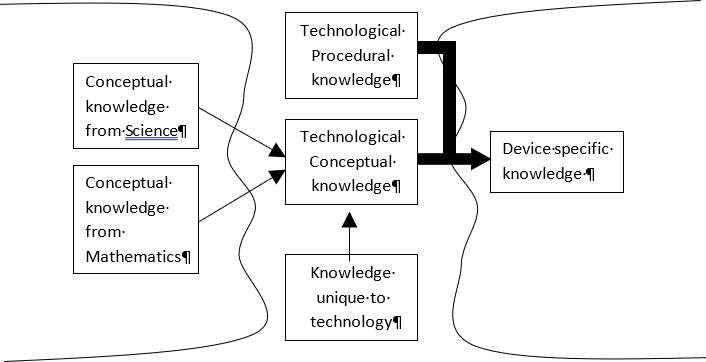
Figure 1: McCormick’s interpretation of the possible subdivisions and combinations of technological knowledge
The epistemological field of technological knowledge also acknowledges the limits of rationality in technological decision-making, noting the role of instrumental rationality, which seeks efficiency rather than strict adherence to scientific rigour (Dusek, 2006). McCormick (2004) adds qualitative knowledge as a crucial element within technological knowledge. While engineering theory (Layton, 1991; Vincenti, 1990) remains central, technological knowledge is diverse, often closer to practical application than abstract science. Technological laws often serve as practical guidelines without requiring full theoretical understanding (Ropohl, 1997). This leads to abductive knowledge, which is that knowledge which serves efficiency and the notion of “good enough” rather than the notion of “rigorous truth” held by the natural sciences (Houkes, 2009).
In summary, technological knowledge is characterised by its practical nature, combining procedural, conceptual, tacit, and value-based elements. Skilled technologists integrate these forms of knowledge, applying them flexibly to solve problems (Herschbach, 1995; Norman, 1998; Savage, 2002).
The multidisciplinary nature of technological knowledge
After specifying the general types of knowledge which compose technological knowledge it is useful to seek the sources of such knowledge in some well-established disciplines from formal education. Figure 2 presents a list of such disciplines (Banks, 2006; Dusek, 2006; Gagel, 2006; Herschbach, 1995; Jones, 1997; Layton, 1991; McCormick, 1997; Middleton, 2005; Norman, 1998; Pannabecker, 1995; Pavlova, 2001; Petrina, 1998a, 1998b; Pretzer, 1997; Ropohl, 1997).
Technological knowledge may mean different things to different people and although it draws out its own unique and characteristic knowledge type from other disciplines, it can neither be identified nor reduced to them (Jones, 1997; Norman, 1998). Technological knowledge requires an understanding from a majority of all the disciplines in Figure 2, but it draws out the formal knowledge selectively from each discipline according to specific applications (Hubka & Eder, 1996; Johannesson & Perjons, 2014). It is therefore an interdisciplinary synthesis of multiple knowledge bases (Herschbach, 1995; McCormick, 1997; Ropohl, 1997).
Several authors have attempted to organise structures for technological knowledge, encompassing creative and valid overlaps in the disciplines listed in Figure 2 (Blandow, 1991; Gawith, 2000; Hatch, 2002; Johnson, 1997; Pannabecker, 1995; Petrina, 1998b, 1998a; Savage, 2002). A structure useful for educators would be the international ITEEA Standards for Technology and Engineering Literacy, also known as STEL (ITEEA, 2020). These are essential for every technology educator to be aware of and apply in their own classroom.
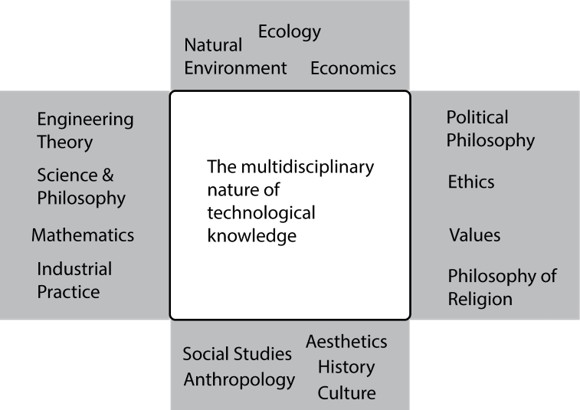
Figure 2: Some well-established disciplines on which technological knowledge relies.
Epistemological frameworks for technology programmes within Technology Education
The role of technology education programmes in a school curriculum has been confusing due to diverse definitions of technological knowledge. Such confusion can be avoided by recognizing a recent paradigm shift in the perception of technology and technology education. International discourse and policy changes have shifted expectations from being technical to technological within education (Doyle et al., 2018). The difference lies in the philosophy and articulation of knowledge bases.
Technical education, historically focused on preparing learners for work by developing predetermined competencies, forming the basis of vocational programmes. In contrast, current technology education aims for a higher understanding of how to use knowledge and skills, both of which may be unspecified initially. It targets developing a more sophisticated understanding of technological knowledge.
International discourse over the past decade has recognised the need to evolve technology education beyond hegemonic practices. This evolution involved moving away from technical education and the applied science paradigm towards technology education, necessitating a new understanding of technological knowledge epistemology. The shift towards a design-based philosophy required significant changes to the epistemological boundaries of knowledge and skills inherited from vocational interpretations of technology education. Design inclusion in technology education required viewing epistemological boundaries as fluid rather than rigid. The paradigm shift of the expectations of technological knowledge can be seen in Table 1.
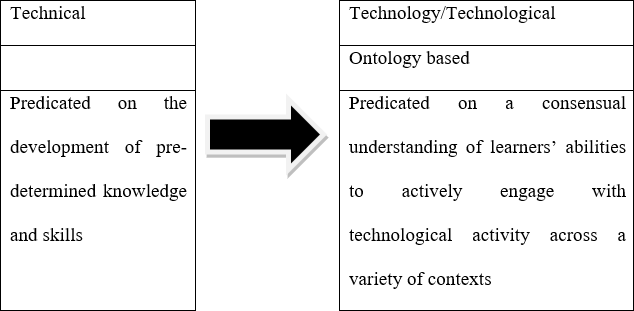
Table 1: The paradigm shift of the expectations of technological knowledge.
An ontology-based curriculum, based on concepts that respect the epistemology of technological knowledge rather than pre-determined knowledge and skills seems to be the way forward when planning technological curricula. To this end, the work presented by de Vries (2016b) and Nordlöf et al. (2021) proves to be useful for framing the structure of a technology course. A taxonomy of the aspects of technological knowledge used by a professional technologist is shown in Table 2 (de Vries, 2016b). A professional engineer, designer or technologist usually acquires much of these aspects of technological knowledge during their educational formation.
Table 2: Knowledge types in technology (de Vries, 2016b).
| Knowledge of the physical nature | Knowledge of the functional nature |
| Numerical | Psychic |
| Spatial | Logical |
| Kinematical | Developmental |
| Physical | Symbolic |
| Biotic | Social |
| Economic | |
| Aesthetic | |
| Juridical | |
| Ethical | |
| Trust |
Fundamental concepts and sub-concepts are presented in Table 3 as those key skills which a learner should retain after experiencing formal education within technology education. The list has found considerable agreement by international experts in technology and engineering education (de Vries, 2016b, 2018; Rossouw et al., 2011).
Table 3: A list of technological concepts (de Vries, 2016b).
| Concept | Designing (design as verb) | System | Modelling | Resources | Values |
| Sub-concepts | Optimizing | Artefact (design as a noun) | Abstraction | Material | Sustainability |
| Trade-off | Function | Simulation | Energy | Effectiveness | |
| Specification | Structure | Visualisation | nformation | Efficiency | |
| Tolerance | Working principle | Analogy | Human | Standards | |
| System hierarchy and function decomposition | Appreciation of science and mathematics | Capital | Quality | ||
| System boundary (limits of variables) | Symbol | Time | Human dignity | ||
| Privacy | |||||
| Usability |
Related to these concepts is the notion of “habits of mind” which are defined as ways of thinking or behaving intelligently when meeting new learning challenges. Such “engineering habits of mind” and “technology habits of mind” would be expected by those who choose to formally engage with and experience technological knowledge (Hanson & Lucas, 2020; Lucas et al., 2014a, 2014b).
In addition to the technological concepts, “engineering habits of mind” and “technological habits of mind”, Nordlöf et al. (2021) present a three-part epistemological tripod to understand how the categories of technological knowledge, based on professional and academic technological knowledge traditions can be understood. An adaptation of this is presented in Table 4.
Table 4: Adapted from (Nordlöf et al., 2021): epistemological tripod of technology education.
| Technical skills | Technological scientific knowledge | Socio-ethical technical understanding | |
| Short description of technological knowledge | Skill or ability with a focus on making things work but not necessarily questioning why they work. (Craftsmanship tradition) | Knowledge gained using a scientific approach in a technological context. Knowing and understanding why things work is essential. (Engineering tradition) | Debating and evaluating the relationship of technology to society, humans and the environment. (Humanities and social sciences tradition). |
| Main justification method | Work experience. | Methods from the technological / engineering sciences and the natural sciences. | Methods from the humanities and the social sciences. |
| Example from technology education | Knowledge of how to build a coloured glass vase by blowing. | Knowledge of the classification of materials and their macro and micro properties. | Knowledge of how social media has changed the society’s infrastructure and the democratisation of knowledge. |
| Example from professional activities | Craftwork of a traditional glassblower. | Calculations performed for conducting a finite element analysis of an artefact. | How the technology of print on demand services will affect manufacturing processes and the survival of small businesses which still use traditional methods of manufacturing. |
This is a powerful tool for concretising the components of technological knowledge, what to aim for when planning a technological curriculum and also how knowledge traditions fit into a more holistic perspective of technological knowledge.
Nordlöf et al. (2021) exemplifies how technical skill is an experience-based knowledge tradition which is expressed mainly through action but usually is more concerned in making things work rather than questioning “why” they work the way they do. Technological-scientific knowledge, is based on adopting scientific approaches to knowledge and is based on a combination of the natural and engineering sciences with mathematics being the lingua franca with which information is communicated. Within technological-scientific knowledge, scientific explanation, mathematical modelling, methodical approaches, adoption of standards and a general stance for precision and rigour is expected. Within the socio-ethical technical understanding, a humanities and social science approach to knowledge is expected whereby a critical stance is developed through analysing sociological, ethical, political and environmental aspects of technology. This ‘leg’ of the technological tripod is analogous to consequential thinking in design education, where students need to reflect about the consequence of the decisions made throughout the process of design. Nordlöf et al. (2021) argue that in order to develop a complete understanding of technological knowledge it would be essential to offer learning experiences from all three epistemological “legs” of the tripod.
The challenges with technological knowledge
Agreement upon a) the general types of knowledge present in technological knowledge, b) upon the formal academic disciplines from which this knowledge needs to be partaken, and c) resolution about a definition and the concepts encompassed, does not mean that the challenges with technological knowledge are overcome. Figure 3 shows some of the main challenges faced by educationalists when trying to operationalise technological knowledge.
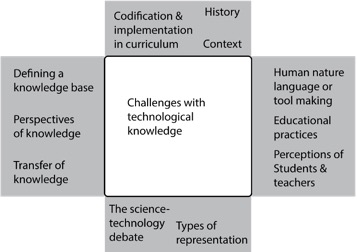
Figure 3: Some of the main challenges faced by educationalists when trying to operationalise technological knowledge.
Defining a knowledge base – structure and content
Defining a knowledge base is particularly difficult for technology. The difficulty of definition and, the fact that technology draws out knowledge from other domains, sets challenges for decisions on the knowledge required for certain tasks and how such knowledge is used (McCormick, 1997; Petrina, 1998a). The previous sections have described how technological knowledge is not a type of formal knowledge similar to that accessed within the recognised academic disciplines. There is not one clearly generalisable representative structure characterising all of technology, as one might find in the domains listed in Figure 2 (Herschbach, 1995; Norman, 1998). It has been argued that academic disciplines exhibit an innate structure which is key to the understanding and retention of knowledge and therefore, this has created intense struggles for technological knowledge to become recognised and accepted as an intellectual academic discipline (Petrina, 1998a). One might say that technology education had an identity crisis and agonised over how to be recognised as a general type of education (Gradwell, 1999). This state seems to be somewhat resolved at present since technology as a school subject is present in the curriculum of many countries and includes diverse levels of study from primary to tertiary education (Barlex & Steeg, 2017; Institution of Mechanical Engineers & The Royal Academy of Engineering, 2016; International Baccalaureate Organization, 2017).
Research has revealed that the attitude to technological knowledge is often unbalanced (Pavlova, 2001). Researchers have advised that a more theoretical component should be added to the practical dimension and, concepts of technological knowledge must be taught, not just skills. This suggestion has impacted directly on those technology teachers who needed to make a transition from a craft, skills-oriented vision, to a new subject with a wider perspective seeking an academic base (de Vries & Tamir, 1997). As argued by one philosopher of technology, Jacques Ellul, the vastness of this new vision of technological knowledge may mean that no one single person can reflect this subject since no one can master all of its relevant fields (Dusek, 2006). Indeed, due to such predicaments, some researchers suggest that technology education research focus more on gaining a better understanding of its own heritage, its mode of enquiry and instructive capability (Pannabecker, 1995).
Educational practices, students, and teachers
For most people, technological literacy has been left for individuals to gain through their daily activities (ITEA, 2000). Technological processes and systems have become so complex that the ad hoc approach is failing most. The study of technology was a mystery to many teachers and administrators in the past, so much so, that a massive effort was deemed necessary to achieve technological literacy (DATA, n.d.; Gorham et al., 2003; ITEA, 2000; ITEEA, 2007, 2020).
Once technology established itself as part of the curriculum, it was found that curricula themselves, teaching methods and instructional materials failed to import high level thinking (de Miranda, 2004). It became apparent that everyday encounters with technology were only incidentally treated in the curriculum. The majority of available tests for technological literacy were composed of items that were void of context or application. In the existing tests, assessment that required application, analysis, synthesis and evaluation of everyday technological encounters were extremely rare (Gagel, 2006), apart from the fact that, they usually emphasised mechanical aspects of knowledge gain like, the rote learning of facts, or the following of procedures rather than knowledge application, (Johnson, 1997). A limited understanding of the scope of technology was due in part to a marginal and narrowing treatment of technology in the school curriculum which may have been too fragmented and abstract (Gagel, 2006). Formal, traditional instruction methods may also have encouraged passive rather than active learning, and may have led to inert knowledge structures within students by placing major emphasis on thought and minor emphasis on practical action (Johnson, 1997; Schraw & Moshman, 1995). Indeed, it is argued that a curriculum which separates knowledge, and, skills and processes makes the teaching and learning of technological concepts and processes very difficult (Jones, 1997). Also, besides the focus on content and methods of instruction, the particular sequence and the relationship of such a sequence to technological educational development have rarely been addressed (Norman, 1998), as has been the input and support of the business and industry community to the full implementation of the study of technology in schools (International Technology Education Association, 2006).
The culture of a school was also found to influence the amount of responsibility assigned to students when they worked on their technological design tasks. Examples of this include, the treating of a problem solving task as a ritual of prescribed steps, the openness and level of an activity and also the type of report process required. Each of these may have been implemented by the school in such a way which does not reflect the authentic technological thinking processes experienced by the student (Jones, 1997; McCormick, 2004).
Educational practices are important to consider since students’ perceptions of technology education influence directly their learning of technological concepts and processes. Research indicates that, while students have a positive attitude towards technology they generally have a limited concept of it (Jones, 1997). Jones’ studies report that students’ expectations influenced the approaches they took, and what knowledge and skills they identified and operationalized in activities. Much of their expectations just centred around building a model (Jones, 1997). Although they were able to refer to interactions as the model was being operated, their explanations were at a descriptive level with little evidence of abstract thinking (Ginns et al., 2005). Typically, they approached the technological task with insufficient consideration of the complexity of the systems and the interrelationships involved (Blandow, 1991).
Teachers’ perceptions and concepts of technological knowledge also impact on subsequent classroom practices. It was found that educators do not naturally make connections but stay within a narrowly defined field of study. So for example, Science teachers discussed technology in terms of applied science, Social Studies teachers focused on the effect of technology on society, English teachers discussed technology as an information tool and Technical teachers’ view was focused on skills and the design and technical aspect of making of artefacts (Gradwell, 1999; Jones, 1997). The outcome of this scenario resulted in very heterogenous perspectives of what constitutes technological knowledge, with the consequence of advisory comments such as that by Layton (1991), which was to explore the relationship between teachers’ content knowledge and the pedagogical knowledge which they employ when they represent and formulate content in order to make it comprehensible to others.
Technological context
Layton’s advice in the previous section leads naturally to a discussion about the importance of framing technological teaching and learning within proper understanding of a technological context (Layton, 1991). Cognitive research has clearly established the link between content knowledge and intellectual processes and the fundamental issue is, that technological thinking skills cannot be taught in isolation from content and context since context is an integral part of cognitive events (Johnson, 1997; Layton, 1991. Indeed, cognitive processes may differ according to the domain of thinking, the specifics of the task and the context (McCormick, 2004). For example, students’ views of a circuit in science, are not concerned with faults in circuits. This perspective requires dissimilar forms of knowledge and cognitive activity from science, for example, when a student is presented with a printed circuit board and has to find breaks or shorts caused by poor soldering in the circuit (McCormick, 1997).
Designing, inventing and learning with and about technology are complex activities that require higher-order thinking which is facilitated not only by abstract thought, but by visual mental imagery and the manipulation of concrete materials in situations and contexts that are meaningful to the learner (Middleton, 2005). Contextual learning can be viewed as a kind of enculturation (Johnson, 1997) and, knowledge and skills may become difficult to transfer because they are so strongly embedded in and tied to the context in which they are acquired (Stevenson, 2004). It is very important that technology educators realize that students’ knowledge is learned in real world contexts (Scott & Lock, 2021) and that students may find it difficult to move from one context to another. This means that it is necessary to actively offer students experience of this change of context rather than expect it to happen automatically as a result of teaching abstractions (McCormick, 2004). The downside of this aspect of technological knowledge is, of course, that the more specific the knowledge and skills that are taught, the sooner they will become outdated (de Vries & Tamir, 1997).
Codification and implementation in the curriculum
The inclusion of context for teaching and learning necessarily implies the inclusion of a considerable proportion of procedural knowledge and tacit knowledge, the “know how” knowledge which is often implicit and therefore difficult to build into a curriculum (McCormick, 1997; Norman, 1998). Such knowledge is implicit because humans have the ability to apply rules to a particular context in a manner that cannot be fully formalized (Dusek, 2006). This knowledge is unspecifiable and not statable, for example, when we are able to discriminate a pattern, without being able to tell by what features we discriminate it. It is similar to the knowledge medical doctors acquire from their clinical practice, knowledge which cannot be gained from books (Polanyi, 1962, 1967; Schraw & Moshman, 1995). Technical know-how implies cognitive resources which the human consciousness is not usually explicitly aware of. Indeed, tacit theories are sometimes very difficult to change even when an individual is explicitly encouraged to do so (Schraw & Moshman, 1995). This is in stark contrast to the Platonic perspective which assumes that all valid knowledge and reasoning can be made explicit and mathematically formalized (Dusek, 2006; Lewis, 1993).
The cognitive resources used with technological knowledge include mental images, reminiscences, experiences and intuitions which either have sunk down into the subconscious, or are highly automated and sometimes cannot be addressed intentionally with conscious reflection any more (Ropohl, 1997). They are therefore difficult to report to others (Schraw & Moshman, 1995). Due to the link with activity therefore, technological knowledge cannot be easily categorized, codified or generalized as in the case of scientific knowledge. What makes it even more challenging is that, there is no uniform pattern of technological thinking. The application of technology requires the integration of a variety of heterogenous factors which are both multi-channelled and multi-levelled and, specific branches of technological knowledge condition specific modes of thinking. The form as well as the complexity of technological knowledge is deeply related to the kind and level of technological activity (Herschbach, 1995).
The science-technology debate - differences in scope, representation and rank
The concept of technology as “applied science” is now recognised as one of the misconceptions widely held about technology (de Vries, 2016b). During the mid-nineteenth century, only sporadically were there major philosophers who had much to say on technology because it was assumed, that technology is the simple application of science and, that it was all for the good of humanity. There was little interest in technological knowledge and, this explains why the philosophy of technology is a relatively young field (Dusek, 2006; Houkes, 2009; Ihde, 2004; Mitcham, 1979).
Scientific concepts are transformed when used for technology, they are not used directly, and design parameters for practical action do not necessarily correspond with scientific parameters (de Vries & Tamir, 1997; Layton, 1991). Technology used to be viewed as subservient to science, merely involving the routine and menial application of scientific knowledge and technique, but, technological progression can only be partially accounted for by the use of scientific knowledge (de Vries & Tamir, 1997; Layton, 1991). Contemporary science is so involved with, and dependent upon sophisticated technological instrumentation, that technology can nowadays be considered prior to science, if not, driving science (Dusek, 2006). Currently, technological knowledge is no longer judged to be subordinate to scientific knowledge (Houkes, 2009). Their relationship is characterized by rank equality, symbiosis and interaction as in the acronym of STEM (Science, Technology, Engineering, & Mathematics) (Hubka & Eder, 1996; Jenkins, 2006; Johannesson & Perjons, 2014; Layton, 1991).
Science focuses on understanding the natural world, often pursuing knowledge for its own sake, while technology involves creating artifacts and systems to meet human needs (Banks, 2006; ITEA, 1996, 2000, 2006; ITEEA, 2003, 2020). This distinction has led to communities valuing “knowing” versus “doing” (Layton, 1991).
The transmission of abstract and practical knowledge has been perceived differently. Abstract knowledge, often used in complex thinking, is typically cast into mathematical form and transmitted through encoded theory and abstract symbols (Layton, 1991). This has led to a hierarchy where abstract, verbally mediated knowledge is considered more cognitively demanding and important, placing universities above technical colleges and practical skill settings (Middleton, 2005). Technological knowledge, communicated through language, notation, and visual means, was seen as imperfect and transmitted via personal demonstration. It was believed that this knowledge would eventually be replaced by mathematical formulations, but, these are meaningful only when related to non-mathematical experiences (Norman, 1998; Polanyi, 1962, 1967).
When designers or engineers produce knowledge about non-existing objects, this knowledge is usually represented as mental images rather than by discursive statements. Thus, the ways in which designers and engineers work may be inexplicable, simply because the processes lie outside the bounds of verbal discourse and are indescribable in linguistic terms (Norman, 1998; Ropohl, 1997).
Teachers often find it challenging to integrate knowledge from other domains like science due to its focus on generalisable abstractions, which contrasts with the context-specific nature of technological knowledge. This can lead to a devaluation of tacit and practical knowledge in favor of conceptual knowledge (Middleton, 2005). Although this attitude has recently diminished, scientific knowledge has historically been valued more highly than technological knowledge because of society’s preference for abstractions (Lehane, 2023; McCormick, 2004).
A pedagogy for technological knowledge – levels and expectations
In order to overcome the challenges mentioned the educational quest involves, finding the best pedagogical practice for technological knowledge to be transferred in given circumstances and for specific purposes. De Miranda, Hill & Smith, Zuga (de Miranda, 2004; Hill & Smith, 2005; Zuga, 2004), and Spiro et al. (1987) suggest basing a model of technological knowledge transfer on the adoption of a constructivist pedagogy, whereby learning takes place by problem-solving and the learner is encouraged to think about new knowledge in terms of his/her prior knowledge (Glaser, 1984). Designing authentic, real-world inquiry involves deliberately scaffolded learning activities (Scott & Lock, 2021). A constructionist pedagogy is considered beneficial and is exemplified in the maker movements (Blikstein, 2018).
Such a pedagogy needs to cater for the different levels of technological knowledge as described by (Herschbach, 1995). The hierarchy of knowledge levels ranges from that of artisan or craft, which is at the lowest level, to that of a technological theory, which is more characteristic of modern technology and approximates more the status of a theory as found in other disciplines such as science. In terms of metacognitive theories, this would entail organising technological knowledge to range, from one end of the continuum, as tacit theories, which provide limited guidance and explanatory power, to informal theories which are only partially accessible, to formal theories, which provide an explicit framework for understanding and regulating one’s own cognition (Schraw & Moshman, 1995). Such a range of technological knowledge levels gives rise to several categories of persons involved with technology, for example, skilled workers, technicians, different levels of engineers, technology educators and engineering scientists (Ihde, 1997; Ropohl, 1997).
Conclusion
The aim of technology education is to promote the capability of people to be engaged influential thinking, doing beings (Gradwell, 1999). It should help people understand and effectively use, manage and assess existing technologies, as well as creatively develop new technologies whilst taking into account key scientific, economic, social, political and ecological aspects (Barlex & Steeg, 2017a, 2017b; de Vries, 2016b; de Vries & Tamir, 1997). Being technologically literate means that a person understands what technology is, how it shapes society and how in turn one is shaped by society (ITEA, 2000; ITEEA, 2007, 2020). Such a person would have the critical agency to engage with technological practices, be cognizant of all the aspects involved, generate judgement, and produce actions that hinder high rates of consumption, inequities, waste, and culturally or ecologically destructive technologies (Blandow, 1991; Petrina, 2000a, 2000b). Even if he or she does not become a practicing technologist, the person would use the knowledge acquired for an enhanced citizenship, by understanding better what professional technologists do and their contribution and responsibilities to society (Banks, 2006).
To engage in such actions, the person would need to import concepts from various disciplines such as science, mathematics, social studies, languages, art and several others. Becoming technologically literate is not a simple matter of learning language, that is, reading, speaking, writing and interpreting in the traditional sense of the words. Technological language is not confined to reading, speaking and writing and, a pedagogy enabling the critical engagement with the built world necessarily involves a critical selection and active engagement with a variety of texts such as digital, and three-dimensional, besides paper (Barlex & Steeg, 2017b; Petrina, 2000b). The long list of skills deemed necessary for a twenty-first century learner shows the types of literacies which one is expected to possess in the modern world (ITEEA, 2020; NCREL, n.d.; Pacific Policy Research Centre, 2020). It is clear that such diversity necessitates the intricate connection of learning concepts together with skills (de Vries & Tamir, 1997). It is also clear that there needs to be multiple ways of making sense of the world and that authentic learning of technological knowledge recognizes a range of abilities and talents while deliberately seeks to foster them across a variety of contexts (Hill & Smith, 2005).
References
- Banks, F. (2006). Technology, Design and Society (TDS) versus Science Technology and Sociaty (STS): Learning Some Lessons. In J. R. Dakers (Ed.), Defining Technological Literacy: Towards an Epistemological Framework. Palgrave Macmillan.
- Barlex, D., & Steeg, T. (2017). Big Ideas for Design and Technology. https://dandtfordandt.wordpress.com/wp-content/uploads/2017/05/big-ideas1.pdf Bayazit, N. (1993). Designing: Design Knowledge: Design Research: Related Sciences. In Design Methodology and Relationships with Science (pp. 121–136). Springer Netherlands. https://doi.org/10.1007/978-94-015-8220-9_6
- Blandow, D. (1991). Integrative Education and Technological Literacy. In IDATER.
- Blikstein, P. (2018). Maker Movement in Education: History and Prospects (pp. 419–437). https://doi.org/10.1007/978-3-319-44687-5_33
- Dakers, J. R. (2006a). Defining Technological Literacy: Towards an Epistemological Framework (J. R. Dakers, Ed.). Palgrave Macmillan US. https://doi.org/10.1057/9781403983053 Dakers, J. R. (2006b). Towards a Philosophy for Technology Education. In J.
- R. Dakers (Ed.), Defining Technological Literacy: Towards an Epistemological Framework. Palgrave Macmillan.
- Dakers, J. R. (2018). Philosophy of Technology and Engineering (pp. 3–6). https://doi.org/10.1007/978-3-319-44687-5_67
- Dakers, J. R., Hallström, J., & de Vries, M. J. (Eds.). (2019). Reflections on Technology for Educational Practitioners: Philosophers of Technology Inspiring Technology Education. In International Technology Education Studies (Vol. 16). Brill Sense Publishers.
- DATA. (n.d.). Exemplification of Professional QTS Standards for Secondary Design and Technology. http://www.data.org.uk/index.php?option=com_content&view=article&id=585&Itemid=531
- de Miranda, M. A. (2004). The Grounding of a Discipline: Cognition and Instruction in Technology Education. International Journal of Technology and Design Education, 14, 61–77.
- de Vries, M. J. (2016a). Philosophy of Technology: Themes and Topics. In M. J. de Vries (Ed.), Handbook of Technology Education (pp. 1–10). Springer, Cham. https://doi.org/10.1007/978-3-319-38889-2_1-1
- de Vries, M. J. (2016b). Teaching about Technology: An Introduction to the Philosophy of Technology for Non-philosophers. In Contemporary Issues in Technology Education (second). Springer International Publishing.
- de Vries, M. J. (2018). Handbook of Technology Education. In Springer Internatinoal Handbooks of Education. Springer International Publishing.
- Doyle, A., Seery, N., & Gumaelius, L. (2018). Defining a curriculum through activity: Facilitating epistemic autonomy in technology education. In 10th Biennial International Design and Technology Teacher’s Association Research Conference (DATTArc) (pp. 29–37). https://www.researchgate.net/publication/333323847_Defining_a_curricu lum_through_activity_Facilitating_epistemic_autonomy_in_technology_ education
- Dusek, V. (2006). Philosophy of Technology: An Introduction. Blackwell Publishing.
- Gagel, C. W. (2006). Towards an Authentic Technological Literacy. Journal of Industrial Teacher Education, 43(4), 69–75.
- Gawith, J. A. (2000). Technology Practice: A structure for developing technological capability and knowledge in schools. In IDATER.
- Ginns, I. S., Norton, S. J., & McRobbie, C. J. (2005). Adding Value to the Teaching and Learning of Design and Technology. International Journal of Technology and Design Education, 15, 47–60.
- Glaser, R. (1984). Education and Thinking: The Role of Knowledge. American Psychologist, 39(2), 93–104.
- Gorham, D., B.Newberry, P., & Bickart, T. A. (2003). Engineering Accreditation and Standards for Technological Literacy. Journal of Engineering Education, 95–99.
- Gradwell, J. B. (1999). The Immensity of Technology … and the Role of the Individual. International Journal of Technology and Design Education, 9, 241–267.
- Hatch, L. (2002). Mapping Dimensions of Technologcial Literacy to the Content Standards. Journal of Technology Studies, 28(1).
- Herschbach, D. R. (1995). Technology as Knowledge: Implications for Instruction. Journal of Technology Education, 7(1). https://vtechworks.lib.vt.edu/server/api/core/bitstreams/cf509e4f-52b9-4079-b8bc-a70b67713bd0/content
- Houkes, W. (2009). The Nature of Technological Knowledge. In Philosophy of Technology and Engineering Sciences (pp. 309–350). Elsevier. https://doi.org/10.1016/B978-0-444-51667-1.50016-1
- Ihde, D. (1997). The Structure of Technology Knowledge. International Journal of Technology and Design Education, 7, 73–79.
- Ihde, D. (2004). Has the Philosophy of Technology Arrived? A State-of-the-Art Review. Philosophy of Science, 71, 117–131.
- Institution of Mechanical Engineers, & The Royal Academy of Engineering. (2016). Big Ideas: The Future of Engineering in Schools. https://www.imeche.org/docs/default-source/1-oscar/reports-policy-statements-and-documents/big-ideas-the-future-of-engineering-in-schools.pdf?sfvrsn=6c01c112_0
- International Baccalaureate Organization. (2017). International Baccalaureate Diploma Programme Curriculum. http://www.ibo.org/programmes/diploma-programme/curriculum/
- ITEA. (1996). Technology for All Americans: A Rationale and Structure for the Study of Technology. International Technology Education Association. http://scholar.lib.vt.edu/TAA/Taa_tech.pdf
- ITEA. (2000). Standards of Technological Literacy: Content for the Study of Technology. International Technology Education Association. http://www.iteaconnect.org/Publications/publications.htm
- ITEA. (2006). Technological Literacy for all: A Rationale and Structure for the Study of Technology (Second). International Technology Education Association. http://www.iteaconnect.org/Publications/publications.htm
- ITEEA. (2003). Advancing Excellence in Technological Literacy: Student assessment, Professional Development, and Program Standards.
- International Technology and Engineering Educators Association. https://www.iteea.org/File.aspx?id=78445&v=1476043b
- ITEEA. (2007). Standards for Technological Literacy: Content for the Study of Technology Third Edition. International Technology and Engineering Educators Association. https://www.iteea.org/File.aspx?id=67767&v=b26b7852
- ITEEA. (2020). Standards for Technological and Engineering Literacy: The Role of Technology and Engineering in STEM Education. International Technology and Engineering Educators Association. www.iteea.org/STEL.aspx
- Johnson, S. (1997). Learning Technological Concepts and Developing Intellectual Skills. International Journal of Technology and Design Education, 7(1–2), 161–180. https://doi.org/10.1023/a:1008861003553
- Jones, A. (1997). Recent Research in Learning Technological Concepts and Processes. International Journal of Technology and Design Education, 7(1–2), 83–96. https://doi.org/10.1023/a:1008813120391
- Layton, D. (1991). Science Education and Praxis: the Relationship of School Science to Practical Action. Studies in Science Education, 19, 43–79.
- Lehane, L. (2023). Pedagogical Content Knowledge in Science and Technology Education (pp. 221–235). https://doi.org/10.1007/978-3-031-24259-5_16
- Lewis, T. (1993). Valid Knowledge and the Problem of Practical Arts Curricula. Curriculum Inquiry, 23(2), 175–202.
- McCormick, R. (1997). Conceptual and Procedural Knowledge. International Journal of Technology and Design Education, 7, 141–159.
- McCormick, R. (2004). Issues of Learning and Knowledge in Technology Education. International Journal of Technology and Design Education, 14(1), 21–44. https://doi.org/10.1023/B:ITDE.0000007359.81781.7c
- Meijers, A. W. M. (2009). Philosophy of Technology and Engineering Sciences (A. W. M. Meijers, Ed.). North-Holland.
- Middleton, H. (2005). Creative Thinking, Values and Design and Technology Education. International Journal of Technology and Design Education, 15, 61–71.
- Mitcham, C. (1979). Philosophy and the History of Technology. In G. Bugliarello & D. Doner (Eds.), The History and Philosophy of Technology. University of Illinois Press.
- Mitcham, C. (1994). Thinking Through Technology: The Path between Engineering and Philosophy. The University of Chicago Press.
- Nordlöf, C., Norström, P., Höst, G., & Hallström, J. (2021). Towards a three-part heuristic framework for technology education. International Journal of Technology and Design Education, 1–22.
- Norman, E. (1998). The Nature of Technology for Design. International Journal of Technology and Design Education, 8, 67–87.
- Pannabecker, J. R. (1995). For a History of Technology Education: Contexts, Systems, and Narratives. Journal of Technology Education, 7(1), 43–56.
- Pavlova, M. B. (2001). Interpretation of Technology in Curriculum documents - a comparative analysis. In IDATER.
- Petrina, S. (1998a). Multidisciplinary Technology Education. International Journal of Technology and Design Education, 8, 103–138.
- Petrina, S. (1998b). The Politics of Research in Technology Education: A Critical Content and Discourse Analysis of the Journal of Technology Education, Volumes 1-8. Journal of Technology Education, 10(1), 27–57.
- Petrina, S. (2000a). The Political Ecology of Design and Technology Education: An Inquiry into Methods. International Journal of Technology and Design Education, 10(3), 207–237. https://doi.org/10.1023/a:1008955016067
- Petrina, S. (2000b). The Politics of Technological Literacy. International Journal of Technology and Design Education, 10(2), 181–206. https://doi.org/10.1023/a:1008919120846
- Petrina, S., Feng, F., & Kim, J. (2008). Researching Cognition and Technology: how we learn across the lifespan. International Journal of Technology and Design Education, 18, 375–396.
- Polanyi, M. (1962). Tacit Knowing: Its Bearing on Some Problems of Philosophy. Reviews of Modern Physics, 34(4), 601–616.
- Polanyi, M. (1967). The Tacit Dimension. Routledge & Kegan Paul Ltd.
- Pretzer, W. S. (1997). Technology Education and the Search for Truth, Beauty and Love. Journal of Technology Education, 8(2).
- Ropohl, G. (1997). Knowledge Types in Technology. International Journal of Technology and Design Education, 7, 65–72.
- Rossouw, A., Hacker, M., & de Vries, M. J. (2011). Concepts and Contexts in engineering and technology education: An international and interdisciplinary Delphi study. International Journal of Technology and Design Education, 4(21), 409–424.
- Ryle, G. (1949). The Concept of Mind. Hutchinson & Co. LTD.
- Savage, E. N. (2002). A Conceptual Framework for Technology Education: A Historical Perspective. The Journal of Technology Studies, 28(2), 98–100.
- Sheppard, S. D., Macatangay, K., Colby, A., & Sullivan, W. M. (2009). Educating Engineers: Designing for the future of the field. Jossey-Bass.
- Simon, H. A. (1996). The Sciences of the Artificial (3rd ed.). The MIT Press.
- Spiro, R. J., Vispoel, W. P., Schmitz, J. G., Samarapungavan, A., & Boerger, A. E. (1987). Knowledge Acquisition for Application:Cognitive Flexibility and Transfer in Complex Content Domains (Issue 409). University of Illinois at Urbana-Champaign.
- Staszowski, E., & Tassinari, V. (2021). Designing in Dark Times. Bloomsbury Visual Arts.
- Stevenson, J. (2004). Developing Technological Knowledge. International Journal of Technology and Design Education, 14, 5–19.
- Vincenti, W. G. (1990). What Engineers Know and How They Know It: Analytical Studies from Aeronautical History. USA: John Hopkins University Press.